
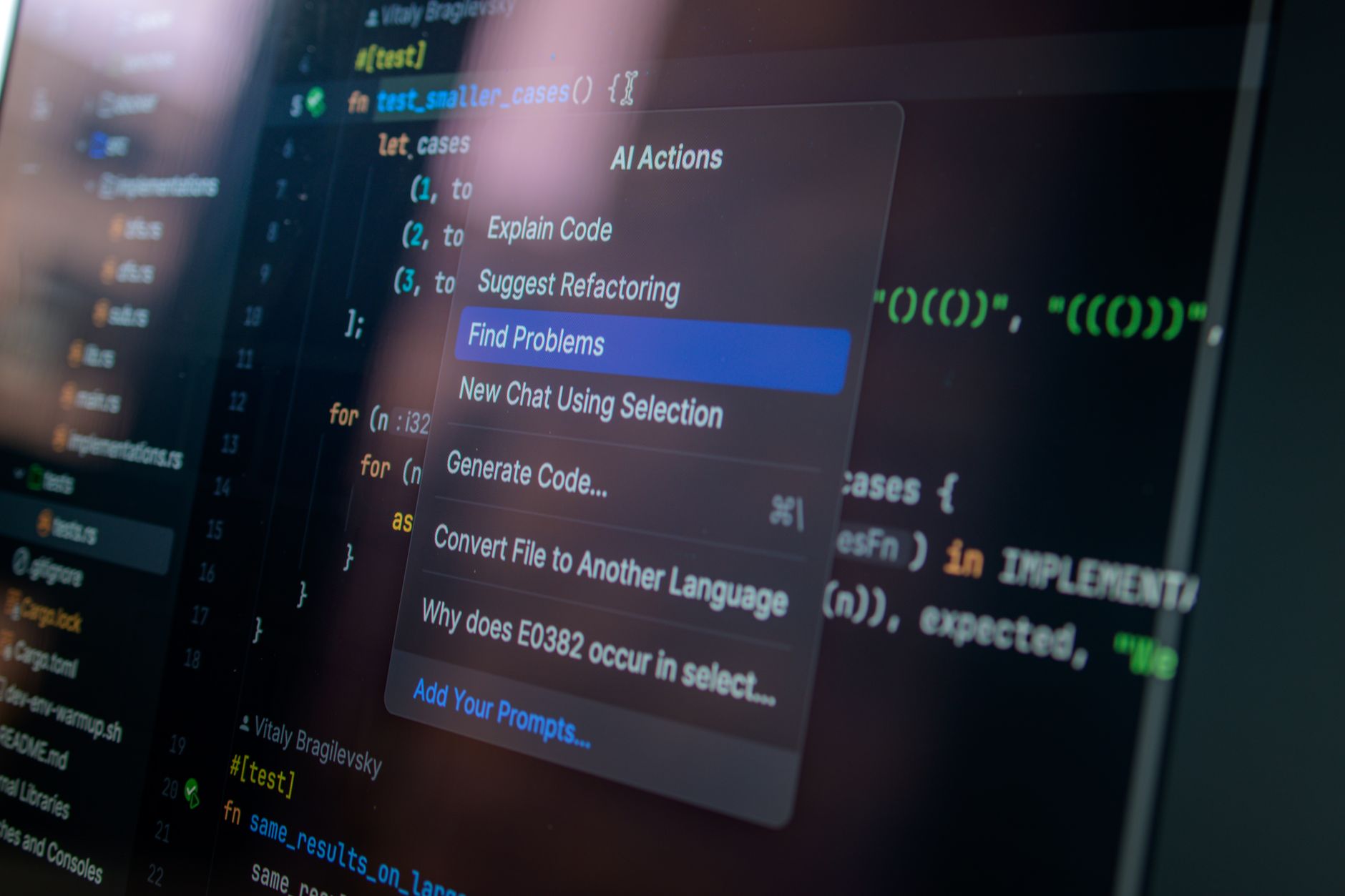
AI Coding Agents: Revolutionizing Development Workflows & Efficiency
Unlock Peak Productivity: The Rise of AI Coding Agents in Development
The landscape of software development is undergoing a profound transformation. Developers today face increasing pressure to deliver high-quality code faster than ever before. This demand often clashes with the complexities of modern systems and the sheer volume of tasks involved. However, a new breed of tools is emerging to bridge this gap: AI coding agents. These intelligent assistants are not just autocomplete tools; they are autonomous entities capable of understanding context, planning solutions, and even executing multi-step coding tasks. They promise to unlock peak productivity by automating repetitive work and providing intelligent support throughout the entire development lifecycle. This shift towards agentic coding is set to redefine how development teams operate, allowing engineers to focus on higher-level problem-solving and innovation.
For IT managers, cloud admins, and DevOps leads, understanding and adopting AI coding agents is no longer optional. It is a strategic imperative. These tools can significantly reduce development cycles, improve code quality, and free up valuable engineering resources. Imagine a world where routine bug fixes or boilerplate code generation happens almost automatically. This is the promise of AI agents for coding. They are becoming indispensable for any organization aiming to stay competitive in the fast-evolving tech world.
TL;DR: How AI Coding Agents Supercharge Developer Productivity
AI coding agents significantly boost developer productivity by automating routine tasks. They generate code, refactor existing solutions, and assist with debugging. These agents streamline workflows, allowing developers to focus on complex problem-solving. They improve code quality and accelerate delivery cycles. Ultimately, AI coding agents enhance overall efficiency in software development.
- Automate repetitive coding tasks.
- Generate code snippets and complete functions.
- Assist with debugging and error resolution.
- Improve code quality and consistency.
- Accelerate development timelines.
Introduction: What Are AI Coding Agents and Why Do They Matter?
AI coding agents represent the next evolution in developer tools. Unlike simple AI coding assistants that offer suggestions, agents possess a higher degree of autonomy. They can understand complex prompts, break them down into smaller tasks, and execute a series of actions to achieve a goal. This includes writing new code, modifying existing code, running tests, and even interacting with version control systems. They leverage advanced machine learning models, often powered by large language models (LLMs), to interpret natural language instructions and translate them into executable code.
The significance of these AI agents for coding cannot be overstated. They are moving beyond mere code completion to becoming true collaborators in the software development lifecycle. For system engineers and security architects, this means faster deployment of secure and robust systems. For DevOps leads, it translates to more efficient CI/CD pipelines and reduced manual overhead. Ultimately, AI coding agents matter because they empower development teams to achieve more with less, driving innovation and accelerating time to market.
The Modern Developer’s Challenge: Why Traditional Workflows Fall Short
Modern software development is inherently complex. Developers often spend a significant portion of their time on mundane, repetitive tasks. This includes writing boilerplate code, searching for syntax errors, or performing routine refactoring. These activities, while necessary, detract from creative problem-solving and strategic thinking. Traditional development workflows, even with advanced IDEs and version control systems, still rely heavily on manual effort for many of these tasks. This can lead to slower development cycles and increased costs.
Furthermore, the sheer volume of new technologies, frameworks, and security considerations adds to the burden. Keeping up with best practices and ensuring code quality across large, distributed teams is a constant struggle. Debugging complex systems, especially in microservices architectures, can consume countless hours. These challenges highlight the limitations of traditional approaches and underscore the need for more intelligent, automated solutions. The demand for speed and quality often creates a bottleneck, where human capacity becomes the limiting factor. This is precisely where AI coding agents offer a compelling solution.
Security is another major concern. Manual code reviews, while critical, are prone to human error. Identifying subtle vulnerabilities or ensuring compliance with security standards across vast codebases is a daunting task. Traditional tools offer some help, but they often lack the contextual understanding needed for proactive threat mitigation. This gap in traditional workflows presents a significant risk for organizations. AI developer tools can augment these efforts, providing an additional layer of scrutiny and automation.
Step-by-Step: Integrating AI Coding Agents into Your Development Environment
Integrating AI coding agents into an existing development environment requires a structured approach. The goal is to maximize benefits while minimizing disruption. First, assess your current toolchain and identify pain points where AI can offer the most immediate value. This might involve areas like unit test generation or initial code scaffolding.
Next, choose an agent that aligns with your team’s programming languages and existing infrastructure. Many of the best AI coding agents offer robust integrations with popular IDEs like VS Code and JetBrains products. Configuration often involves installing a plugin and providing API keys. Ensure proper authentication and authorization for the agent to access your codebase securely. Then, begin with small, isolated tasks to familiarize your team with the agent’s capabilities. This iterative approach helps build confidence and refine usage patterns.
Here is a checklist for integrating AI coding agents:
- Evaluate Needs: Identify specific development bottlenecks suitable for AI automation.
- Select Agent: Choose an AI coding agent compatible with your tech stack and security policies.
- Install Integration: Deploy necessary IDE plugins or CLI tools for the chosen agent.
- Configure Access: Set up API keys and authentication for secure codebase interaction.
- Start Small: Begin with low-risk tasks like boilerplate generation or simple refactoring.
- Monitor Performance: Track the agent’s output and efficiency, providing feedback.
- Train Team: Educate developers on effective prompting and agent interaction.
- Iterate and Expand: Gradually introduce agents to more complex tasks as proficiency grows.
Consider a scenario where you want an agent to generate a basic REST API endpoint. With an integrated agent, you might provide a natural language prompt like: “Create a Python Flask endpoint at /api/users that returns a list of user objects from a mock database.” The agent would then generate the necessary code, including imports, route definitions, and a placeholder for data retrieval. This significantly reduces the initial setup time. For more advanced use cases, such as leveraging Qwen 3.6 27B Local AI, careful local setup and resource allocation are key.
Real-World Impact: Use Cases for AI Agents in Software Development
The impact of AI agents for coding extends across various stages of the software development lifecycle. Their ability to automate and assist with complex tasks provides tangible benefits. For instance, in initial development, agents can rapidly scaffold new projects or generate boilerplate code. This frees developers from repetitive typing, allowing them to focus on unique business logic. They can create entire classes, functions, or even microservices based on high-level specifications.
During the coding phase, AI agents act as intelligent pair programmers. They offer real-time code suggestions, identify potential errors, and suggest refactoring opportunities to improve code quality and maintainability. This proactive assistance can significantly reduce the number of bugs introduced early in the development process. For example, an agent might suggest a more efficient algorithm for a specific data processing task or point out a potential race condition in concurrent code. This is particularly valuable for complex systems where human oversight alone might miss subtle issues. Moreover, for tasks requiring advanced inference, integrating techniques like Speculative Decoding LLMs can further accelerate the agent’s response times without sacrificing accuracy.
Beyond code generation, AI coding agents are proving invaluable in testing and debugging. They can automatically generate unit tests, ensuring comprehensive test coverage. When bugs do occur, agents can analyze stack traces, pinpoint potential root causes, and even suggest fixes. This dramatically cuts down debugging time, a notorious time sink for many development teams. For security architects, AI agents can also perform preliminary security scans, identifying common vulnerabilities and adherence to secure coding practices before code even reaches a formal audit. This early detection is critical for mitigating risks, especially against threats like those detailed in GitHub 0-Day Threats.
- Code Generation: Quickly create boilerplate, functions, classes, or entire modules from natural language prompts.
- Refactoring and Optimization: Suggest improvements to existing code for better performance, readability, and maintainability.
- Debugging Assistance: Analyze errors, identify root causes, and propose solutions for faster bug resolution.
- Unit Test Generation: Automatically write comprehensive unit tests to ensure code quality and coverage.
- Documentation: Generate inline comments, API documentation, or summarize code functionality.
- Code Review Support: Provide automated feedback on code style, potential bugs, and adherence to standards.
- Security Auditing: Identify common security vulnerabilities and suggest fixes early in the development cycle.
Comparing the Best AI Coding Agents: Features and Fit for Your Team
The market for AI coding agents is rapidly expanding, with several powerful contenders emerging. Each agent offers a unique set of features and strengths, making the choice dependent on your team’s specific needs and existing tech stack. Understanding these differences is crucial for selecting the best fit. For example, some agents excel in specific programming languages, while others offer broader language support. The integration capabilities with various IDEs and version control systems also vary significantly.
When evaluating AI agents for coding, consider factors like the underlying AI model’s intelligence, its ability to understand complex prompts, and its performance in generating accurate and secure code. Cost, privacy policies, and the level of customization offered are also important considerations. Some agents provide local deployment options, which can be critical for organizations with strict data governance requirements. Others are cloud-native, offering scalability and ease of use.
Here’s a comparison of some leading AI coding agents:
| AI Coding Agent | Key Features | Best For | Integration |
|---|---|---|---|
| GitHub Copilot | Context-aware code completion, function generation, multi-language support. | Individual developers, small teams, rapid prototyping. | VS Code, JetBrains IDEs, Neovim. |
| Claude Code (Anthropic) | Strong in logical reasoning, robust code generation, secure coding practices. | Complex problem-solving, secure development, enterprise environments. | API-driven, various IDE extensions. |
| OpenAI Codex (via API) | Highly flexible, powers many custom solutions, diverse language support. | Custom AI tools, research, specialized applications. | API access, custom integrations. |
| Cursor | IDE built around AI, chat-to-code, debugging, context awareness. | Developers seeking an integrated AI-first coding experience. | Standalone IDE (VS Code fork). |
| Amazon Q Developer | AWS-centric, security scanning, code generation for AWS services. | AWS developers, cloud-native applications, security-focused teams. | AWS Toolkit for VS Code/JetBrains, AWS Console. |
| JetBrains AI Assistant | Deep integration with JetBrains IDEs, context-aware suggestions, refactoring. | JetBrains users, specific language ecosystems (Java, Python, Kotlin). | All JetBrains IDEs. |
When making a decision, consider a trial period if available. This allows your team to experience the agent firsthand and evaluate its practical utility within your specific development workflow. For instance, while GitHub Copilot is excellent for general code completion, a team focused on complex, secure enterprise applications might find Claude Code or Amazon Q Developer more suitable due to their emphasis on robust and secure code generation. The future integration of models like GPT-5.6 Sol Preview will further expand these capabilities.
Best Practices for Maximizing Efficiency with AI Coding Agents
To truly leverage the power of AI coding agents, developers and teams must adopt specific best practices. Simply installing an agent is not enough; effective interaction and integration are key. First, treat the AI agent as a knowledgeable assistant, not a replacement. Human oversight remains critical for ensuring correctness, security, and alignment with architectural goals. Always review the code generated by an AI agent before committing it. This prevents the introduction of subtle bugs or security vulnerabilities that the agent might miss.
Second, learn to craft clear and precise prompts. The quality of the agent’s output is directly proportional to the clarity of the input. Provide context, specify constraints, and break down complex requests into smaller, manageable steps. For example, instead of “write a function,” try “write a Python function called calculate_average that takes a list of numbers and returns their average, handling empty lists gracefully.” This level of detail guides the agent more effectively. Furthermore, integrate agents into your existing CI/CD pipelines. This ensures that AI-generated code undergoes the same rigorous testing and review processes as manually written code.
- Human Oversight is Paramount: Always review AI-generated code for accuracy, security, and architectural fit.
- Craft Clear Prompts: Provide detailed, specific, and contextual instructions to the agent.
- Iterate and Refine: Don’t expect perfect code on the first try; refine prompts and guide the agent.
- Integrate with CI/CD: Ensure AI-generated code passes through your existing testing and deployment pipelines.
- Understand Agent Limitations: Be aware of what your chosen agent excels at and where it might struggle.
- Maintain Security Best Practices: Scrutinize AI-generated code for potential vulnerabilities.
- Educate Your Team: Train developers on effective interaction patterns and responsible AI use.
- Start with Low-Risk Tasks: Begin with boilerplate, unit tests, or simple refactoring to build confidence.
Common Mistakes to Avoid When Adopting AI Agents for Coding
While AI coding agents offer immense benefits, pitfalls exist for the unwary. Avoiding common mistakes ensures a smoother adoption process and maximizes the return on investment. One significant error is over-reliance on the agent without proper validation. Believing that AI-generated code is inherently perfect can lead to critical bugs, security flaws, or performance issues. Always remember that agents are tools; they require human guidance and verification.
Another common mistake is failing to provide sufficient context or clear instructions. Vague prompts often result in generic, unhelpful, or incorrect code. Developers must learn to communicate effectively with the AI, much like they would with a human colleague. Additionally, neglecting security reviews for AI-generated code is a serious oversight. Agents can sometimes introduce subtle vulnerabilities, either due to training data biases or misinterpretations of complex security requirements. Treat AI-generated code with the same, if not greater, scrutiny as any other third-party dependency.
- Blind Trust: Never commit AI-generated code without thorough human review and testing.
- Vague Prompting: Providing unclear or insufficient instructions will lead to poor results.
- Ignoring Security: Failing to audit AI-generated code for vulnerabilities is a significant risk.
- Lack of Integration: Not integrating agents into existing workflows can lead to disjointed processes.
- Expecting Perfection: AI agents are powerful but not infallible; iterative refinement is often needed.
- Over-Automation: Attempting to automate tasks that still require deep human intuition or complex decision-making.
- Neglecting Training: Skipping team education on how to effectively use and manage AI agents.
- Data Privacy Oversight: Using agents without understanding their data handling and privacy implications.
Expert Insights: The Future of Agentic Coding and AI in Software Engineering
The trajectory of AI in software engineering points towards increasingly autonomous and sophisticated AI coding agents. Industry experts widely predict a future where agentic coding becomes a standard part of the development process. This evolution will move beyond simple code suggestions to agents capable of understanding entire system architectures, proposing design patterns, and managing complex integrations. The focus will shift from developers writing every line of code to orchestrating and guiding intelligent agents.
One key area of advancement will be in the agents’ ability to learn and adapt from feedback. This will allow them to become more tailored to a team’s specific coding style, preferences, and project requirements over time. Furthermore, the integration of AI agents with other advanced AI capabilities, such as natural language processing for requirements gathering and machine learning for predictive analytics in debugging, will create a truly intelligent development ecosystem. Security will also see significant advancements, with agents proactively identifying and mitigating threats, leading to inherently more secure software from the outset. The future promises a symbiotic relationship between human developers and AI, fostering unprecedented levels of innovation and efficiency.
graph TD

    A[High-Level Requirements] --> B(AI Planning Agent)

    B --> C{Break Down Tasks}

    C --> D[Code Generation Agent]

    C --> E[Test Generation Agent]

    C --> F[Refactoring Agent]

    D --> G[Codebase]

    E --> H[Test Suite]

    F --> G

    H --> I{Run Tests}

    I -- Fail --> B

    I -- Pass --> J[Human Review & Approval]

    J --> K[Deployment]
FAQs About AI Coding Agents and Developer Workflows
- Q: What are AI coding agents?
- A: AI coding agents are autonomous artificial intelligence programs designed to assist developers with various coding tasks, from generating code snippets to debugging and testing, often with minimal human intervention.
- Q: How do AI coding agents enhance coding workflows?
- A: AI coding agents enhance workflows by automating repetitive tasks, providing intelligent code suggestions, identifying and fixing bugs, and accelerating the overall development process, leading to increased efficiency and productivity.
- Q: What is agentic coding?
- A: Agentic coding is a software development paradigm where AI agents take on more autonomous roles, planning, writing, testing, and even modifying code based on high-level instructions, reducing the need for constant human oversight.
- Q: Are AI coding agents suitable for all programming languages?
- A: While many AI coding agents support a wide range of popular programming languages, their effectiveness can vary depending on the agent’s training data and the specific language or framework being used.
Conclusion: Embracing the Agentic Future of Development
The advent of AI coding agents marks a pivotal moment in software development. These intelligent tools are transforming how development teams operate, offering unprecedented levels of efficiency, code quality, and innovation. By automating repetitive tasks, providing intelligent assistance, and even taking on autonomous coding responsibilities, AI agents for coding are empowering developers to focus on higher-value activities. This shift is not about replacing human engineers but augmenting their capabilities, allowing them to tackle more complex challenges and accelerate project delivery.
For IT leaders, cloud administrators, and security architects, embracing AI coding agents is a strategic investment in the future. It promises streamlined workflows, reduced technical debt, and more secure software. The key to successful adoption lies in understanding their capabilities, integrating them thoughtfully, and maintaining human oversight. As these technologies continue to evolve, the agentic future of development will undoubtedly lead to more robust, efficient, and innovative software solutions.
Ready to Transform Your Workflow? Explore AI Agent Solutions Today
The time to explore and integrate AI coding agents into your development workflow is now. Organizations that proactively adopt these advanced AI developer tools will gain a significant competitive advantage. Start by evaluating the specific needs of your development teams and researching the AI coding agents that best align with your technology stack and security requirements. Consider pilots on smaller projects to understand the practical benefits and challenges.
Investing in training for your developers on how to effectively interact with these agents is also crucial. This will ensure your team can harness the full potential of agentic coding. By strategically implementing AI agent solutions, you can unlock new levels of productivity, accelerate innovation, and build a more resilient and efficient software development pipeline. The future of coding is intelligent, autonomous, and incredibly powerful.

Leave a Reply